Until recently, we thought of colon cancer as a disease that only happened “later in life.” A tsunami of new data has upended that belief, revealing a startling rise among Gen Z and Millennials. While the reasons are complex, groundbreaking science now points toward one controllable factor that we hold in our hands every single day: our diet.
A decade ago, a colon cancer diagnosis in someone under 50 was a statistical outlier; today, it is a disturbing trend. New data reveals that while overall colon cancer rates are dropping in older adults (thanks to screening), they have been rising by about 1% to 2% every year in those under 50 since the mid-1990s. The good news is that understanding why this shift is occurring gives us the blueprint for pre-emption. By exploring the intimate connection between the food we eat, the way we prepare it, and the biology of our gut, we can reclaim control over our long-term health.
The Culprits: Why the Modern Diet May Be Fueling the Fire
While genetics and environmental factors play a role, the dominant hypothesis among scientists is that changes in lifestyle, particularly diet, are the primary drivers of this trend. Our modern food system has shifted dramatically, favoring convenience over chemistry.
- Ultra-Processed Food (UPF) Overload: This isn’t just about “junk food.” It’s about foods that are radically altered from their original state, often containing additives, emulsifiers, and unnecessary industrial ingredients. A study published in The BMJ found that men who consumed the highest amounts of ultra-processed foods had a 29% higher risk of developing colorectal cancer. These foods are linked to chronic inflammation in the gut lining—a known precursor to cancer.
- The “Western Diet” Trifecta: A diet high in red meat (beef, pork, lamb) and processed meats (bacon, deli meats, hot dogs) provides specific compounds—such as heme iron and nitrates—that can damage the cells lining the colon. In high concentrations, especially when coupled with low fiber, these compounds become carcinogenic.
- Insulin Resistance and Inflammation: Diets high in added sugars and refined carbohydrates spike insulin levels and promote systemic inflammation. Chronic inflammation causes cells in the gut to mutate more frequently, increasing the risk of tumor formation.
The Defense: Harnessing the Power of Mitigating Foods
The core principle of prevention is addition, not just restriction. Certain foods and specific ingredients possess powerful chemical properties that actively mitigate the risks outlined above. According to the Harvard T.H. Chan School of Public Health, dietary patterns are one of the most significant modifiable risk factors we have.
- The Fiber Revolution: Dietary fiber is the undisputed champion of colon health. It works through multiple pathways, most notably by feeding beneficial gut microbes that ferment soluble fiber into Short-Chain Fatty Acids (SCFAs), particularly butyrate. Butyrate is the primary energy source for the cells lining your colon; it strengthens the gut barrier and actively suppresses inflammation and cancer cell growth.
- Calcium and Vitamin D: Evidence suggests calcium binds to harmful bile acids in the gut, neutralizing them before they can damage the colon wall. Combined with Vitamin D, these compounds exhibit protective, anticarcinogenic effects.
- Antioxidants and Polyphenols: Found in colorful fruits, vegetables, green tea, and nuts, these compounds combat oxidative stress and neutralize free radicals—unstable molecules that can damage cell DNA.
The Ecosystem Approach: Putting it All Together
Dietary prevention is not about a “superfood”; it’s about a synergy. How you choose, prepare, and dose your ingredients determines their protective power. Think of your gut as a biological lab where this specific reaction needs to happen and it all works together like an ecosystem:
- Selection: Opt for polyphenol-rich olive oil rather than neutral seed oils, or whole oats rather than refined cereal.
- Synergy: Fiber needs hydration to function. Without enough water, high fiber can lead to discomfort. In the gut, fiber needs beneficial bacteria (often supported by fermented foods) to be converted into helpful butyrate.
- Preparation Matters: Grilling or frying red meats at high temperatures creates harmful chemicals called HCAs and PAHs. Switching to slow-roasting or steaming, and marinating meats in antioxidant-rich herbs, can significantly reduce these carcinogens.

Practical Tips: Finding and Dosing Beneficial Ingredients
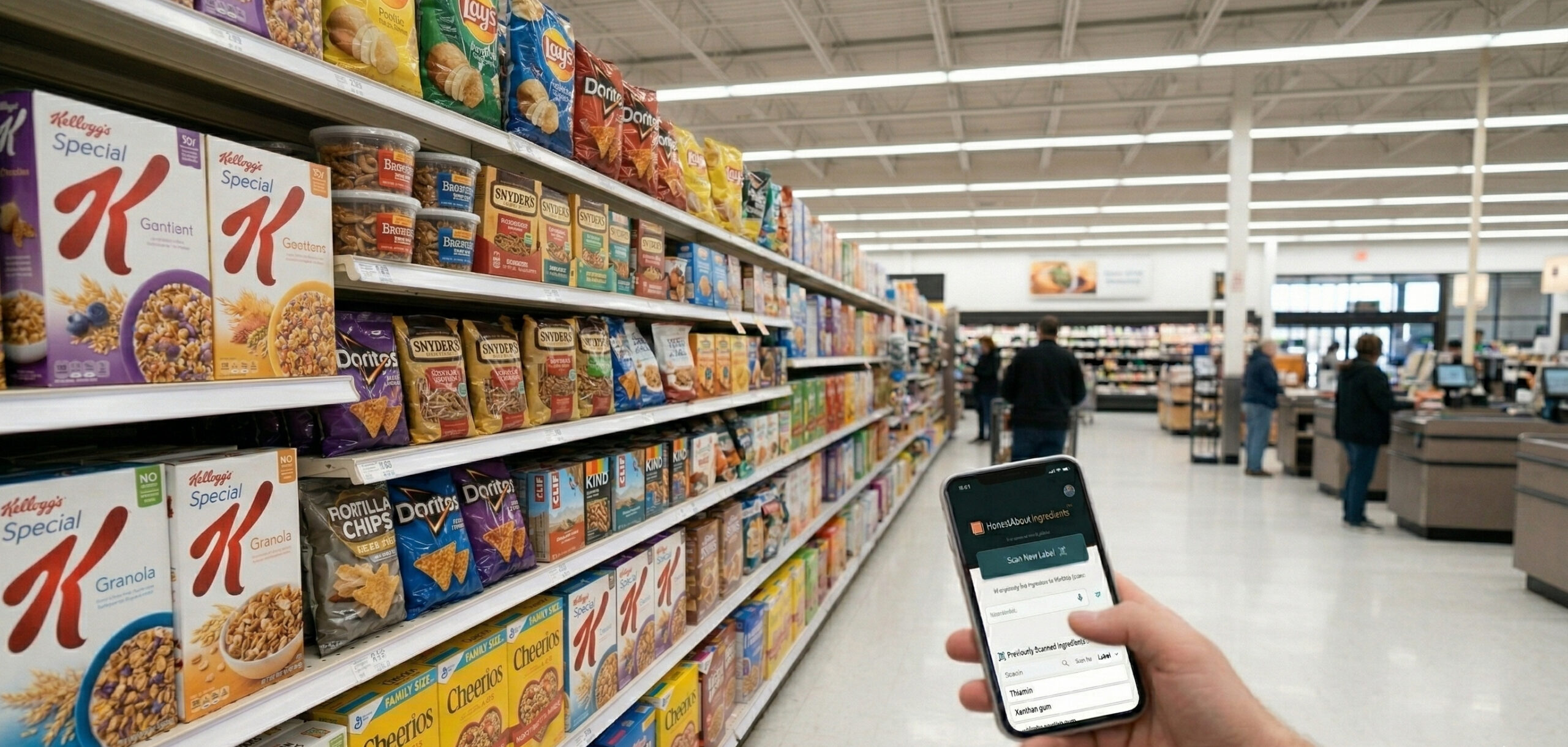
- Read the Label (But Read Between the Lines): Ignore the “healthy” marketing on the front. Focus on the ingredient list on the back. Make sure you understand all the ingredients and why they are added to your products.
- The Fiber Ladder: Aim for 25–38 grams of fiber daily. Don’t jump there in one day—increase your intake slowly by adding one fiber source (e.g., black beans in a salad, or an apple with skin) every three days to avoid bloating.
- Smart Dosing: Think of certain foods as supplements. Instead of a large steak three times a week, use red meat as a flavor enhancer in a stir-fry that is primarily vegetables and whole grains.
Conclusion: The Challenge of Clarity
The link between diet and the uptick of colon cancer in young people is clear, scientifically sound, and hopeful. However, the biggest challenge is not motivation—it’s clarity. Our modern food landscape is complex. Ingredient lists are dense, often hiding harmful additives behind trade names. It is increasingly difficult for even the most health-conscious consumer to know precisely what they are putting into their bodies.
The Need for Understanding Ingredients and Function
We must bridge the gap between scientific knowledge and the grocery store shelf. Understanding food ingredients and how they function—whether they promote butyrate production or trigger inflammation—is no longer a niche interest; it is an essential survival skill. We need to become “fluent” in ingredients to take decisive action.
Empower Your Body, One Ingredient at a Time
Taking control of your health requires accurate information. If you find ingredient lists confusing and want a tool that translates complexity into clarity, we built something for you. The Honest About App empowers you with immediate, scientific data about exactly what is in your food. Stop guessing and start knowing.