What if the most powerful tool in your pain-management toolkit isn’t sitting in your medicine cabinet, but waiting in your grocery cart?
Chronic pain affects hundreds of millions of people nationwide, weaving its way into daily routines and draining vibrant energy. For years, conventional management focused almost exclusively on pharmaceuticals and physical therapy. However, the latest clinical data have revealed a groundbreaking shift: pain is not just localized in our joints or muscles; it is profoundly influenced by our systemic biochemistry.
Today, neuroscientists and nutritionists alike view the kitchen as a frontline defense. By understanding how specific dietary patterns modulate our nervous system, we can transition from merely masking pain to actively cooling the fires of cellular inflammation.
The Biochemistry of Relief: Why Nutrition Matters
To understand why food impacts pain, we have to look at how the body processes injury and discomfort. Chronic pain is frequently driven by a runaway immune response. When your immune system stays on high alert, it secretes pro-inflammatory proteins called cytokines, which sensitize your nerve endings and lower your pain threshold.
Better nutrition alters this chemistry through several key mechanisms:
- Quenching Cellular Fire: Certain nutrients block the exact same inflammatory pathways (COX-2 enzymes) targeted by over-the-counter pain relievers.
- Nurturing the Gut-Brain Axis: Over 70% of our immune cells reside in the gut. A healthy microbiome produces short-chain fatty acids (SCFAs) that travel to the brain, calming microglial cells—the brain’s immune cells that can amplify pain signals.
- Reducing Oxidative Stress: Chronic pain damages tissues at a cellular level. Antioxidants act as molecular scavengers, neutralizing the unstable molecules that cause this wear and tear.
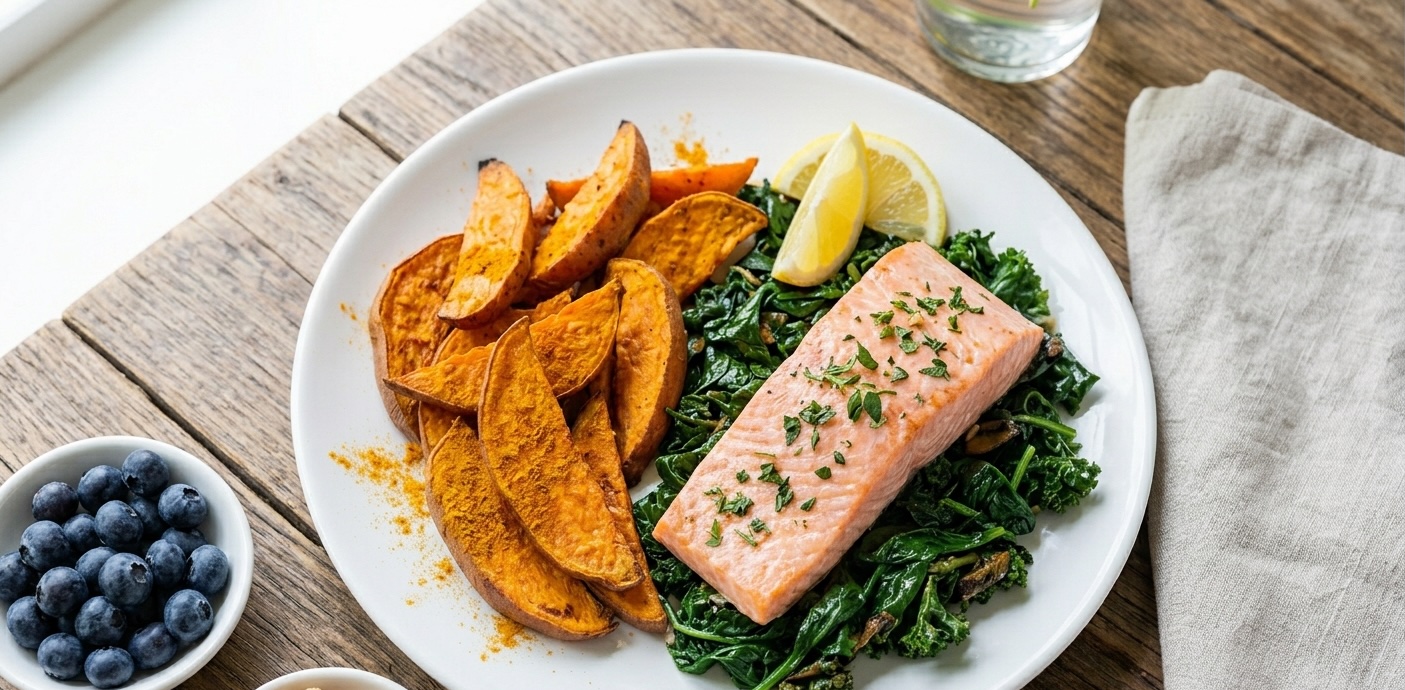
Powerhouse Foods and Ingredients for Pain Management
Integrating pain-fighting ingredients into your daily routine doesn’t mean eating a restrictive diet. It’s about adding highly functional, bioactive compounds to your plate.
| Ingredient / Food | Primary Active Compound | Mechanism of Action | Best Used For |
| Turmeric | Curcumin | Inhibits inflammatory cytokines and NF-\kappa B pathways. | Joint pain, arthritis, and systemic swelling. |
| Fatty Fish (Salmon, Mackerel) | Omega-3 Fatty Acids (EPA/DHA) | Displaces pro-inflammatory omega-6 fats in cell membranes. | Inflammatory joint diseases, back pain. |
| Ginger | Gingerols & Shogaols | Acts as a natural NSAID by suppressing leukotriene synthesis. | Muscle soreness, menstrual pain, migraines. |
| Tart Cherries | Anthocyanins | Accelerates muscle recovery and lowers uric acid levels. | Gout, post-exercise muscle pain. |
| Leafy Greens (Spinach, Kale) | Magnesium & Folate | Relaxes smooth muscle tissue and regulates nerve signaling. | Fibromyalgia, muscle cramps, tension headaches. |
The Synergy of Prep: Ingredients, Nutrition, and Cooking
Eating a handful of raw turmeric won’t magically cure a flare-up. To unlock the true potential of functional foods, you have to understand bioavailability — how well your body absorbs and utilizes a compound.
True pain-relief nutrition relies on a three-pronged synergy:
- The Ingredient Pairing: Some compounds need a “buddy system.” For example, the curcumin in turmeric is notoriously difficult for the body to absorb. However, pairing it with black pepper (which contains piperine) increases turmeric’s absorption rate by an astonishing 2,000%.
- The Nutritional Medium: Many potent antioxidants and vitamins (A, D, E, and K) are fat-soluble. Drizzling your leafy greens or tomato dishes with high-quality extra virgin olive oil ensures your body can actually absorb the nutrients.
- The Preparation Method: How you cook matters. High-heat frying and charring create Advanced Glycation End-products (AGEs), compounds that may trigger inflammation. Opt instead for steaming, poaching, slow-cooking, or consuming foods raw when appropriate to preserve their molecular integrity.
Smart Sourcing and Dosing Tips
When using food as a functional tool for pain management, consistency and quality are paramount.
- Look for Standardization: If you are purchasing concentrated ingredients or extracts (like ginger or curcumin powders), look for labels that specify the percentage of active compounds (e.g., “standardized to 95% curcuminoids”). Learn more about these standards via the National Institutes of Health (NIH) Dietary Supplement Database.
- Start Low and Build Gradually: Functional ingredients are potent. Start with culinary doses (e.g., half a teaspoon of ginger powder daily) and monitor how your body responds over two weeks before increasing the amount.
- Beware of Hidden Fillers: Packed foods often market themselves as “healthy,” but are loaded with inflammatory emulsifiers, excess sodium, or hidden sugars that counteract the benefits. Always cross-reference your food labels using resources like the Harvard T.H. Chan School of Public Health Nutrition Source.
Navigating the Challenges of Food-as-Medicine
While the science supporting nutritional pain management is robust, it is not without its hurdles. Unlike a targeted prescription pill, whole foods work subtly and cumulatively. It can take weeks of consistent dietary shifts to notice a measurable decrease in pain levels.
Furthermore, bioavailability issues, bio-individuality (what calms inflammation in one person might trigger a sensitivity in another), and the sheer difficulty of reading complex ingredient labels make the journey highly personalized. Navigating grocery aisles to find genuinely pure, anti-inflammatory ingredients can feel like a full-time job.

Empowerment Through Ingredient Literacy
To truly take control of your chronic pain, you must become an active investigator of what goes into your body. Understanding the specific function of food ingredients enables you to move past deceptive front-of-package marketing and make choices rooted in real science. When you can identify hidden inflammatory triggers and target potent, pain-quelling bioactives, you transform eating from a daily chore into a deliberate act of self-care.
Take Control of Your Plate with Honest About
Ready to strip away the guesswork and start using nutrition to fight chronic pain? The Honest About app is your ultimate grocery-store companion. Powered by rigorous science, Honest About allows you to instantly scan any food label (not just the UPC code) to reveal the true impact of each ingredient.
No more confusing chemical names or hidden meaning. Download Honest About today on the App Store or Google Play, and start scanning your way to a vibrant, pain-free life.
Disclaimer: This content is for informational purposes only and should not replace professional medical advice, diagnosis, or treatment. Always consult with your healthcare provider before making significant changes to your diet or pain management plan.