You’ve heard it since childhood: “Breakfast is the most important meal of the day.” It’s practically a nutritional commandment. But does modern science actually back that up, or is it just an outdated adage that stuck?
Why Timing Matters (But Ingredients Matter More)
If you are confused about when to eat, you aren’t alone. In an era dominated by headlines about intermittent fasting and metabolic flexibility, the simple question of ‘when to eat’ has become incredibly complicated. The truth is, food is more than just nutrients for your body or calories to burn; it has far reaching effects, impacting everything from signaling your hormones to regulating your circadian rhythm. Today, we’re cutting through the noise to explore the biological purpose of your meals and how to understand which ingredients truly fuel a healthy day.

Breaking Down the “Big Three”: The Chrono-Nutrition Perspective
To understand meal importance, we must look at Chrono-nutrition—the study of how our internal circadian clocks interact with our metabolism. Your body isn’t a static machine; its ability to process nutrients fluctuates over a 24-hour cycle.
1. Breakfast: Reversing the Catabolic State
After 8–12 hours of sleep, your body is in a catabolic state, meaning it has been breaking down stored tissues to maintain blood glucose levels.
- The Protein Leverage Hypothesis: Research suggests that the human body has a prioritized appetite for protein. By consuming high-quality protein at breakfast, you signal to your brain that the “amino acid pool” is replenished, reducing late-day cravings.
- Hormonal Syncing: Morning sunlight and food intake help regulate the Cortisol Awakening Response (CAR). A breakfast rich in healthy fats provides the raw materials for hormone synthesis as you transition into a high-energy state.
2. Lunch: Managing the Postprandial Slump
The mid-day meal is a balancing act of fueling the brain and body without triggering the ‘food coma’ (Post-prandial Somnolence).
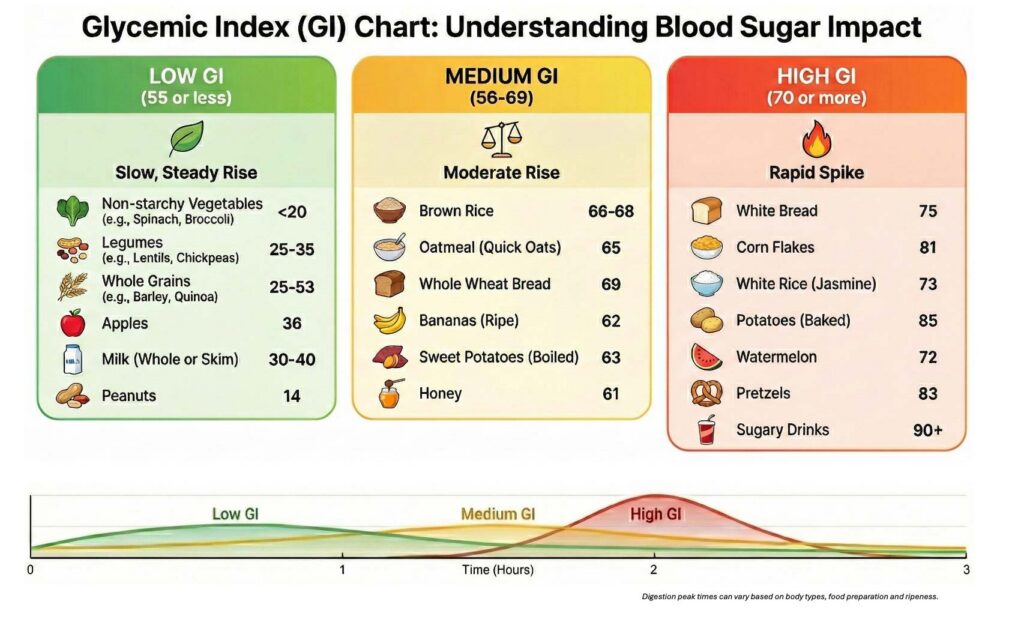
- Glucose Variability: The goal is to minimize “glucose spikes.” High-glycemic carbs cause a massive insulin release followed by a rapid drop in blood sugar—the primary cause of the 3:00 PM crash.
- The Satiety Factor: High-fiber vegetables slow gastric emptying, ensuring that energy from your lunch is released as a steady trickle rather than a flood, allowing you to maintain cognitive focus.
3. Dinner: Priming for Glycemic Control and Repair
While often the largest meal, dinner serves as the final ‘data entry’ for your metabolic day.
- The Muscle Protein Synthesis (MPS) Window: During deep sleep, the body undergoes peak cellular repair. Amino acids from your evening protein intake are the building blocks used by growth hormones for repair.
- The Serotonin Connection: Complex carbohydrates at dinner can aid in the transport of Tryptophan across the blood-brain barrier. Tryptophan is the precursor to Serotonin, which then converts into Melatonin for your sleep-wake cycle.
Putting It Together: Timing vs. Nutrient Totality
So, which wins the title of most important meal of the day? The scientific consensus is shifting away from championing one specific meal time. Whether you prefer three square meals or ‘One Meal A Day’ (OMAD), the priority is Nutrient Density. Your body is remarkably adaptive. The ‘most important’ factor isn’t the clock—it’s ensuring that within a 24-hour cycle, you acquire the essential building blocks that your body needs.
How to Identify Necessary Ingredients: The “Functional” Checklist
A healthy day requires specific ‘essential’ ingredients that your body cannot manufacture on its own.
- The Essential Amino Acid (EAA) Profile: Nine amino acids must come from food. Without lean meats, eggs, or “complete” plant pairings, your body cannot efficiently synthesize new proteins for immunity or repair.
- The Micronutrient “Co-Factors”: Metabolism requires workers. For example, magnesium is involved in 300+ enzymatic reactions, including ATP production, and B-vitamins are essential for converting food into usable energy.
- Fatty Acid Ratios (Omega-3 vs. Omega-6): Modern diets are often high in pro-inflammatory Omega-6. Prioritize high Omega-3 content (fish, walnuts) for the structural integrity of your cell membranes.
- The Fiber Matrix: Ingredients should feed your microbiome. Soluble fiber acts as a prebiotic, feeding gut bacteria that produce Butyrate, which reduces systemic inflammation.
Conclusion: The Holistic View
When you look at the biochemistry of nutrition, the idea of a single ‘most important meal’ dissolves. The goal is to achieve a complete nutritional profile over the course of the day.
The Need for Ingredient Intelligence
Ultimately, navigating health requires shifting your mindset from counting calories to understanding function. Knowing which additives cause inflammation and which whole foods provide cellular energy is the ultimate superpower in modern wellness.
GET INGREDIENT INTELLIGENT
Stop guessing about what’s on your plate. To truly optimize your meals—whether you eat one or three a day—you need to understand what you are consuming.
Download the Honest About app today.
Simply scan a product label or search our proprietary database to get an instant, scientifically-backed breakdown of ingredients. Understand what you’re eating, why it matters, and make every meal count.