Ever wondered if there was a secret handshake between your gut and your entire body’s well-being? Turns out, there is, and it involves a powerful partnership you might be overlooking: fermented foods and Vitamin K.
Your Gut’s Hidden Superpowers
In the quest for optimal health, two often-underestimated players are gaining significant scientific attention: fermented foods and Vitamin K. Far from being fleeting wellness trends, these nutritional powerhouses offer profound, evidence-backed benefits that stretch from your digestive tract to your bones, heart, and beyond. This isn’t just about probiotics; it’s about an intricate dance within your gut microbiome that directly influences the production and absorption of essential nutrients, particularly the often-elusive Vitamin K. Get ready to discover how cultivating a vibrant inner ecosystem with fermented delights can unlock a cascade of health transformations.

The Dynamic Duo: Essential Ingredients
To harness this synergy, you need the right building blocks. Here is what is essential for fermentation and Vitamin K production:
- For Fermentation (The Precursors):
- Fibrous Vegetables: Cabbage, cucumbers, and carrots provide the prebiotics that beneficial bacteria (like Lactobacillus) need to thrive.
- Quality Starter Cultures: Whether it’s the natural yeasts in the air for sourdough or specific strains for yogurt and kefir.
- Non-Iodized Salt: Crucial for suppressing “bad” bacteria while allowing “good” microbes to flourish.
- For Vitamin K (The Sources):
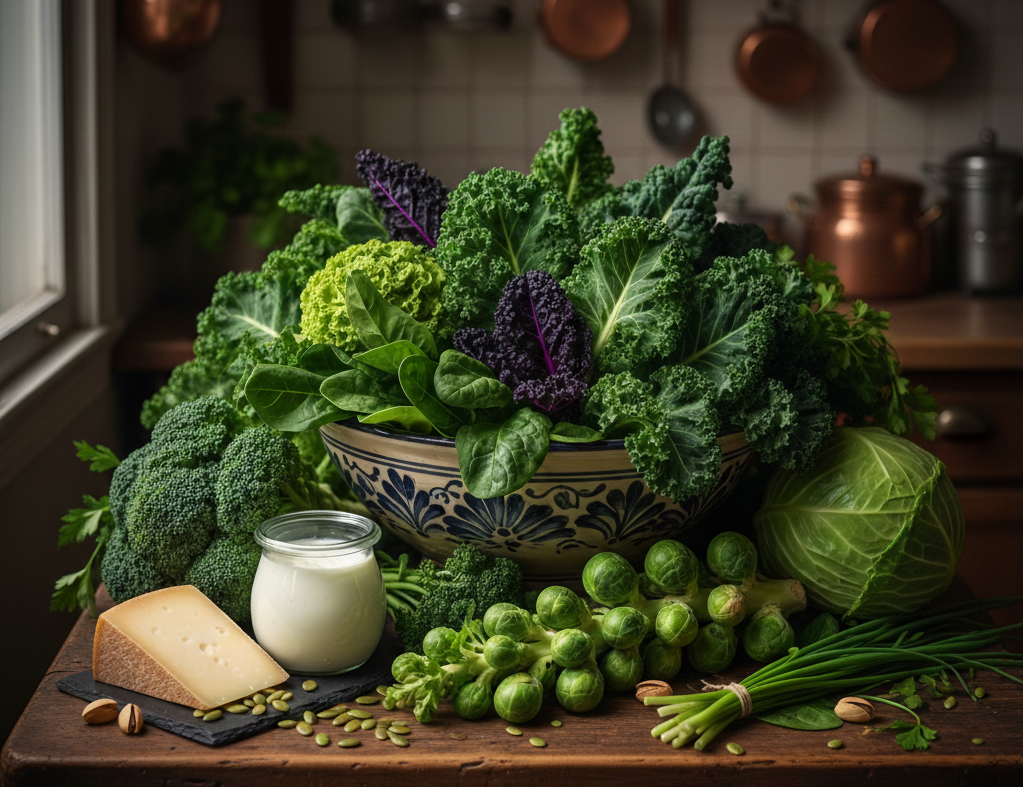
- Vitamin K1 (also called phylloquinone): It has long been studied and is mostly associated with plant-based foods and is found in leafy greens like kale, collard greens, spinach, brussel sprouts and broccoli.
- Vitamin K2 (also known as menaquinone): Its health benefits are only recently becoming clearer. Research is suggesting that Vitamin K2 may make a longer-lasting impact on your health than vitamin K1.This is the “fermentation miracle.” It is synthesized by bacteria and found in high concentrations in Natto (fermented soy), sauerkraut, certain aged cheeses (Gouda, Brie), and dairy products like kefir.
How These Ingredients Power Your Health
- Digestive Efficiency: Fermentation breaks down “anti-nutrients” (like phytic acid), making the minerals in your food more bioavailable.
- The Bone-Heart Connection: Vitamin K2 acts as a traffic controller for calcium. It ensures calcium is deposited in your bones and teeth (where it’s needed) rather than your arteries (where it can cause stiffening).
- Immune Resilience: A gut enriched by fermented foods trains your immune system to distinguish between friend and foe, reducing chronic inflammation.
The Symphony of Synergy: Preparation and Taste
How does it all work together? It’s a balance of taste, nutrition, and preparation.
- Taste: Fermentation adds “umami”—that savory, deep flavor profile. For some, pairing the tang of sauerkraut with Vitamin K1-rich greens creates a complex, satisfying meal.
- Preparation: Simple methods like lacto-fermentation (submerging veggies in brine) naturally increase the Vitamin K2 content of your food over time.
- Where to find them: Look for “Live and Active Cultures” on labels in the refrigerated section. Avoid shelf-stable pickles or kraut, as the pasteurization process kills the beneficial microbes.
Uses and Challenges
Incorporating these foods is a powerful lifestyle shift, but it isn’t without challenges. The modern palate is often used to high-sugar, processed foods, making the tartness of fermented items an acquired taste. Additionally, for those with specific gut sensitivities like SIBO, introducing fermented foods must be done slowly. However, the long-term use—stronger bones, clearer skin, and a robust metabolism—far outweighs the initial adjustment period.
The Need for Food Literacy
To truly take control of your health, you must understand food ingredients and their functions. We live in an era of “label confusion,” where marketing terms often mask a lack of true nutritional value. Understanding the functional role of Vitamin K, its variations and the biological process of fermentation empowers you to choose foods that act as medicine rather than just fuel.
Be Proactive with the Honest About app
Ready to take the guesswork out of your grocery trip? Understanding what’s actually in your food is the first step toward a healthier microbiome.
Download the Honest About app today to scan ingredients, decode labels, and find the best fermented, Vitamin K-rich foods for your unique health goals. Start eating with intention!