Forget what you know about “meathead” supplements; the latest science reveals that creatine is actually a powerhouse for your brain, your longevity, and your daily energy levels.
For decades, creatine was tucked away in gym bags, reserved for those looking to bulk up. But in 2026, the narrative has shifted dramatically. Creatine monohydrate is now recognized as one of the most versatile health tools available, with research highlighting its profound impact on the “muscle–brain axis.”
Recent data suggests that while it’s still the gold standard for physical performance, its most exciting benefits lie in cognitive health. By supporting brain bioenergetics, creatine helps maintain cellular energy during periods of metabolic stress, such as sleep deprivation or intense mental fatigue. Whether you are an aging adult looking to preserve mobility or a busy professional seeking a mental edge, creatine offers a scientifically backed foundation for total body vitality.
Who is Creatine Best For?
Creatine is a “functional” ingredient that addresses specific physiological challenges across various life stages:
- Older Adults: It is a key ally against sarcopenia (age-related muscle loss). When paired with light resistance training, it significantly improves functional capacity and reduces the risk of falls.
- Cognitive Seekers: Since the brain consumes roughly 20% of the body’s energy, creatine acts as a critical buffer to keep your “mental battery” charged.
- Women: Emerging research suggests creatine may support mood and bone health, particularly during midlife and menopause.
- Plant-Based Eaters: Because creatine is primarily found in animal products, those on vegetarian or vegan diets often have lower baseline levels and may see the most significant “boost” from supplementation.
The Internal Factory: How Your Body Builds Creatine
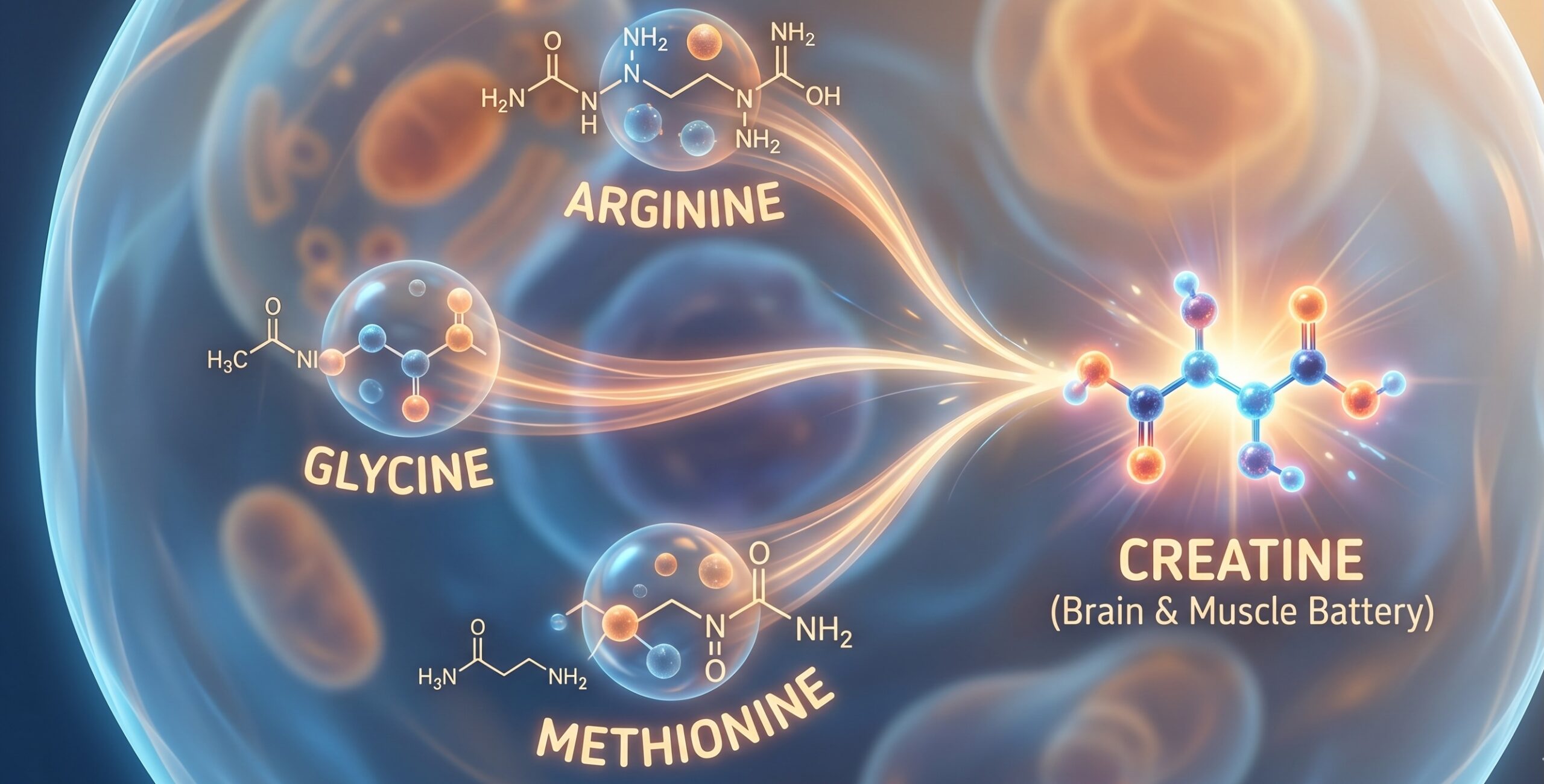
While we often think of creatine as a powder, your body is actually a sophisticated “creatine laboratory.” About 50% of your daily creatine is produced internally, primarily in the liver and kidneys. To do this, your body requires a steady supply of three specific amino acids—the “building blocks.”
Understanding these precursors helps you optimize your diet even if you aren’t reaching for a supplement tub:
- Glycine: Think of glycine as the foundation. It is the simplest amino acid, but plays a massive role in collagen production and metabolic health.
- Where to find it: Bone broth, chicken skin, and gelatin are the richest sources. For plant-based options, look to legumes and spinach—they are great for getting these critical protein-building blocks.
- Arginine: This amino acid is the “engine.” It helps with blood flow (vasodilation) and provides the nitrogen necessary for the creatine molecule.
- Where to find it: Pumpkin seeds (pepitas) are an arginine gold mine. Turkey breast, peanuts, and spirulina are also excellent choices.
- Methionine: This is the “finisher.” Your body uses a form of methionine called SAMe to donate a methyl group, completing the chemical structure of creatine.
- Where to find it: Brazil nuts, sesame seeds, eggs, and lean beef.
The “Synthesis Stress”: Synthesis is a “metabolically expensive” process. It is estimated that creatine synthesis consumes about 40% of all methyl groups available in the body. By getting more creatine from food or supplements, you may “spare” these building blocks for other vital functions, like DNA repair and detoxification.
The Dietary Powerhouses: Where Creatine Lives Naturally
If you want to boost your levels through whole foods, you have to look toward skeletal muscle. Since creatine is used for energy in muscles, that is where it is stored in the animal kingdom.
| Food Source | Creatine Content (gr per kg) | Why it matters |
| Herring | 6.5 – 10.0 | The “king” of creatine sources; also high in Omega-3s. |
| Pork & Beef | 4.5 – 5.0 | Highly bioavailable; provides the necessary B12 for synthesis. |
| Salmon | 4.0 – 5.0 | Great for the muscle-brain axis due to high vitamin D levels. |
| Chicken | 3.0 – 4.0 | A leaner source, though slightly lower in concentration than red meat. |
| Cranberries | Trace | One of the only plant sources with any detectable amount. |
Preparation and the Plant-Based Challenge
Cooking matters. Intense heat can degrade creatine content by up to 30%. While we aren’t suggesting a raw meat diet, gentle cooking methods like poaching or medium-rare searing help preserve the integrity of the creatine.
For vegetarians and vegans, the lack of pre-formed creatine in the diet means muscle stores are typically lower. However, this is an advantage for supplementation: research shows that plant-based individuals often see the most dramatic improvements in memory and physical strength when they begin supplementing.
How It All Works Together: Dosing and Purity
Finding the right balance between nutrition and supplementation is simpler than you think.
- The Golden Ratio: For most adults, a daily maintenance dose of 3 to 5 grams of creatine monohydrate should be the “sweet spot” for long-term health.
- Preparation: Creatine is highly bioavailable. You can stir it into water, a morning smoothie, or even your coffee. It doesn’t require a “loading phase” unless you are looking for immediate athletic results.
- The Synergy: Creatine works best when your nutrition is on point. Consuming it alongside carbohydrates or protein may help with uptake into the muscles and brain.

Conclusion: Balancing the Benefits
While creatine is incredibly safe and effective, the primary challenge is consistency. Unlike caffeine, you won’t feel a “jolt” instantly; its benefits build up over time as your cellular stores saturate. Additionally, relying solely on food can be difficult—you would need to eat nearly two pounds of steak to get 5 grams of creatine! This is why understanding the specific ingredients that support your body’s natural production is essential for bridging the gap.
Ultimately, the need to understand food ingredients and their function has never been more critical. When you know exactly how an ingredient like glycine or creatine functions in your body, you stop “dieting” and start fueling. Precision in what we consume allows us to age with strength and think with clarity.
Take Control with Honest About
Confused by long labels, hidden fillers or confusing ingredients? Use the Honest About app to scan the labels of your favorite products, decode complex labels, and find the best sources for your health journey.
- Scan: Use our high-precision label scanner to recognize ingredients, not just bar codes.
- Analyze: Check what other ingredients are in your food.
- Optimize: Ensure your supplements are necessary.