The Great Meal Debate: Is Breakfast, Lunch, or Dinner Actually the Most Important?

You’ve heard it since childhood: “Breakfast is the most important meal of the day.” It’s practically a nutritional commandment. But does modern science actually back that up, or is it just an outdated adage that stuck?

Why Timing Matters (But Ingredients Matter More)

If you are confused about when to eat, you aren’t alone. In an era dominated by headlines about intermittent fasting and metabolic flexibility, the simple question of ‘when to eat’ has become incredibly complicated. The truth is, food is more than just nutrients for your body or calories to burn; it has far reaching effects, impacting everything from signaling your hormones to regulating your circadian rhythm. Today, we’re cutting through the noise to explore the biological purpose of your meals and how to understand which ingredients truly fuel a healthy day.

Breaking Down the “Big Three”: The Chrono-Nutrition Perspective

To understand meal importance, we must look at Chrono-nutrition—the study of how our internal circadian clocks interact with our metabolism. Your body isn’t a static machine; its ability to process nutrients fluctuates over a 24-hour cycle.

1. Breakfast: Reversing the Catabolic State

After 8–12 hours of sleep, your body is in a catabolic state, meaning it has been breaking down stored tissues to maintain blood glucose levels.

  • The Protein Leverage Hypothesis: Research suggests that the human body has a prioritized appetite for protein. By consuming high-quality protein at breakfast, you signal to your brain that the “amino acid pool” is replenished, reducing late-day cravings.
  • Hormonal Syncing: Morning sunlight and food intake help regulate the Cortisol Awakening Response (CAR). A breakfast rich in healthy fats provides the raw materials for hormone synthesis as you transition into a high-energy state.

2. Lunch: Managing the Postprandial Slump

The mid-day meal is a balancing act of fueling the brain and body without triggering the ‘food coma’ (Post-prandial Somnolence).

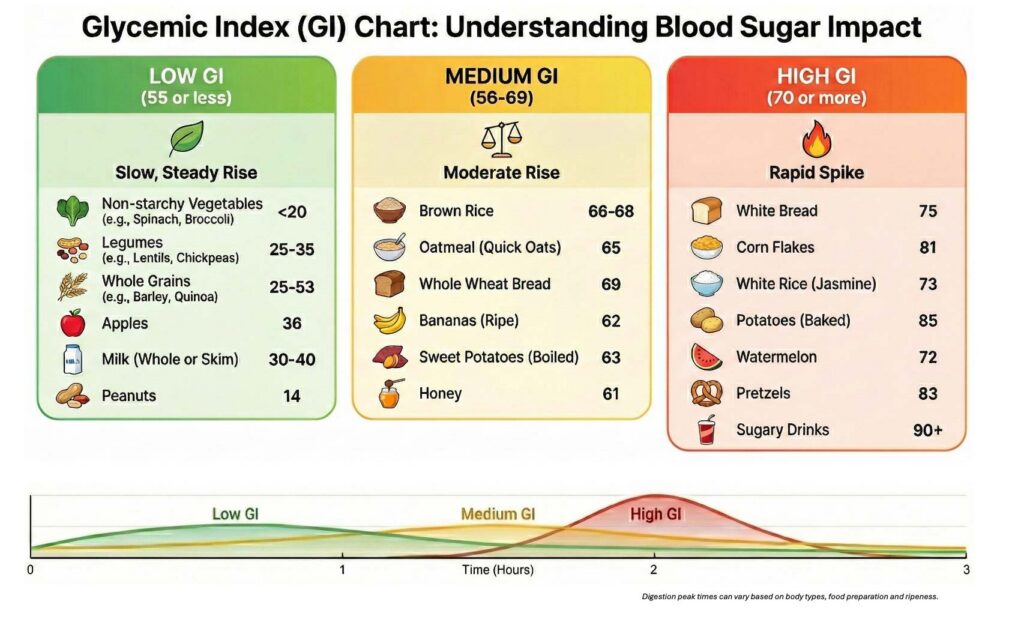
  • Glucose Variability: The goal is to minimize “glucose spikes.” High-glycemic carbs cause a massive insulin release followed by a rapid drop in blood sugar—the primary cause of the 3:00 PM crash.
  • The Satiety Factor: High-fiber vegetables slow gastric emptying, ensuring that energy from your lunch is released as a steady trickle rather than a flood, allowing you to maintain cognitive focus.

3. Dinner: Priming for Glycemic Control and Repair

While often the largest meal, dinner serves as the final ‘data entry’ for your metabolic day.

  • The Muscle Protein Synthesis (MPS) Window: During deep sleep, the body undergoes peak cellular repair. Amino acids from your evening protein intake are the building blocks used by growth hormones for repair.
  • The Serotonin Connection: Complex carbohydrates at dinner can aid in the transport of Tryptophan across the blood-brain barrier. Tryptophan is the precursor to Serotonin, which then converts into Melatonin for your sleep-wake cycle.
Putting It Together: Timing vs. Nutrient Totality

So, which wins the title of most important meal of the day? The scientific consensus is shifting away from championing one specific meal time. Whether you prefer three square meals or ‘One Meal A Day’ (OMAD), the priority is Nutrient Density. Your body is remarkably adaptive. The ‘most important’ factor isn’t the clock—it’s ensuring that within a 24-hour cycle, you acquire the essential building blocks that your body needs. 

How to Identify Necessary Ingredients: The “Functional” Checklist

A healthy day requires specific ‘essential’ ingredients that your body cannot manufacture on its own.

  • The Essential Amino Acid (EAA) Profile: Nine amino acids must come from food. Without lean meats, eggs, or “complete” plant pairings, your body cannot efficiently synthesize new proteins for immunity or repair.
  • The Micronutrient “Co-Factors”: Metabolism requires workers. For example, magnesium is involved in 300+ enzymatic reactions, including ATP production, and B-vitamins are essential for converting food into usable energy.
  • Fatty Acid Ratios (Omega-3 vs. Omega-6): Modern diets are often high in pro-inflammatory Omega-6. Prioritize high Omega-3 content (fish, walnuts) for the structural integrity of your cell membranes.
  • The Fiber Matrix: Ingredients should feed your microbiome. Soluble fiber acts as a prebiotic, feeding gut bacteria that produce Butyrate, which reduces systemic inflammation.

Conclusion: The Holistic View

When you look at the biochemistry of nutrition, the idea of a single ‘most important meal’ dissolves. The goal is to achieve a complete nutritional profile over the course of the day.

The Need for Ingredient Intelligence

Ultimately, navigating health requires shifting your mindset from counting calories to understanding function. Knowing which additives cause inflammation and which whole foods provide cellular energy is the ultimate superpower in modern wellness.

GET INGREDIENT INTELLIGENT

Stop guessing about what’s on your plate. To truly optimize your meals—whether you eat one or three a day—you need to understand what you are consuming.

Download the Honest About app today.

Simply scan a product label or search our proprietary database to get an instant, scientifically-backed breakdown of ingredients. Understand what you’re eating, why it matters, and make every meal count.

The Lipid Blueprint: How Olive Oil’s Ingredients Redefine Modern Health

Beyond its role as a culinary staple, Extra Virgin Olive Oil (EVOO) serves as a potent molecular modulator that talks directly to your cells.


The Mediterranean diet has long been the subject of intensive epidemiological study, with olive oil identified as one of its primary bioactive components. While public health guidance often simplifies its benefits as “heart-healthy,” a deeper examination of its molecular structure reveals a sophisticated delivery system of  health-promoting compounds. EVOO isn’t just a source of calories; it is a complex “pharmacy in a bottle,” containing over 30 distinct phenolic compounds that interact with human physiology at a cellular level. Recent clinical research indicates that its unique chemical profile actively regulates metabolic pathways and alters the expression of genes associated with inflammation and cellular repair. By analyzing these biochemical mechanisms, we can transition from anecdotal evidence to understanding how this ancient extract serves as a cornerstone of modern preventative medicine.

High-quality extra virgin olive oil poured into a bowl, representing a bioactive staple of the Mediterranean diet.

The Anatomy of Olive Oil: Bioactive Constituents

To understand the efficacy of olive oil, we must dissect its chemical composition into two primary categories: the fatty acid profile and the minor polar fraction.

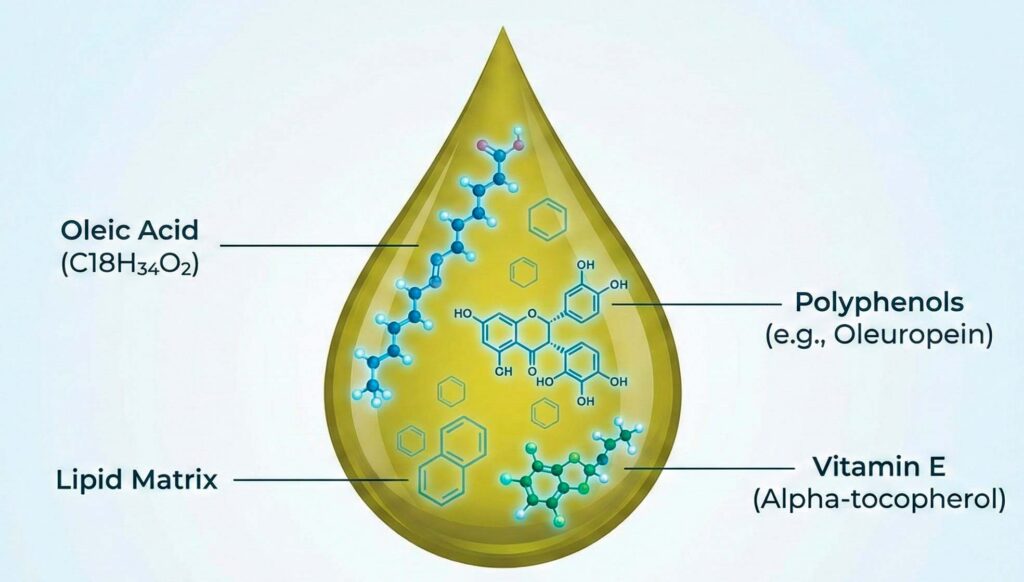
  • Oleic Acid (18:1): A mono-unsaturated fatty acid (MUFA) that constitutes 55% to 83% of the oil’s total volume. It is remarkably stable and highly resistant to lipid peroxidation compared to poly-unsaturated fats.
  • The Phenolic Fraction: Includes key secoiridoids such as Oleuropein and Oleocanthal, as well as the potent antioxidant Hydroxytyrosol.
  • The Lipid Matrix: Comprising Vitamin E (Alpha-tocopherol) and Squalene, which act as secondary antioxidants and precursors to essential hormonal structures.

Chemical composition of EVOO, including Oleic Acid, Polyphenols like Oleuropein, and Vitamin E.

Biological Pathways: How Ingredients Power Your Health

The health benefits of olive oil are derived from specific biochemical interactions within the human body:

1.  Building “Bulletproof” Cells (Oleic Acid)

Every cell in the human body is encased in a lipid membrane. By incorporating oleic acid into these membranes, the body increases the structural stability of the cell. This substitution reduces the susceptibility of the cell wall to oxidative damage, thereby improving cellular communication and insulin receptor sensitivity.

2.  A Natural Anti-Inflammatory (Oleocanthal)

The “peppery” sensation characteristic of high-quality EVOO is caused by Oleocanthal. This compound acts as a natural inhibitor of cyclooxygenase (COX) enzymes. By modulating the same pathways as common anti-inflammatory drugs, it helps mitigate the low-grade systemic inflammation that underpins chronic metabolic disease.

3.  Cardiovascular Armor (Hydroxytyrosol)

Hydroxytyrosol is one of the few antioxidants capable of crossing the blood-brain barrier. Its primary clinical function is the protection of Low-Density Lipoprotein (LDL) from oxidative stress. Since oxidized LDL is a primary driver of atherosclerosis (the hardening of arteries), this mechanism is a critical factor in cardiovascular disease prevention.

The “Force Multiplier” Effect: How It All Works Together

In nutritional science, synergy is paramount; olive oil represents a masterclass in biological cooperation. The MUFA base (oleic acid) serves as a stable hydrophobic vehicle, essential for the bioavailability of the oil’s fat-soluble polyphenols and vitamins. Without the lipid carrier, many of these micronutrients would be poorly absorbed by the gastrointestinal tract.

Furthermore, while the fatty acids work to fortify the cellular architecture, the polyphenols actively quench the reactive oxygen species (ROS) that threaten that architecture. This “outside-in” defense system creates a level of efficacy that synthetic or isolated supplements cannot replicate.

Olive Oil in the Modern Nutritional Landscape

In a diet frequently dominated by some ultra-processed seed oils—which are often rich in pro-inflammatory Omega-6 fatty acids—extra virgin olive oil serves as a necessary corrective. Despite common misconceptions, high-quality EVOO possesses high oxidative stability, with a smoke point ranging from 190°C to 210°C (375°F to 410°F). More importantly, its use as a “flavor carrier” for nutrient-dense vegetables increases the absorption of fat-soluble vitamins (A, D, E, and K) from other foods, making it a “force multiplier” for a whole-food diet.

A Foundation for Resilience

Olive oil is far more than a kitchen convenience; it is a foundational pillar of health validated by both tradition and clinical scrutiny. By providing the body with stable structural lipids and a specialized suite of anti-inflammatory compounds, it protects the cardiovascular, neurological, and metabolic systems from the cumulative damage of daily life. Choosing a high-quality, cold-pressed extra virgin oil is a strategic investment in biological resilience.

The Imperative of Food Literacy

The study of olive oil underscores a vital shift in how we must approach nutrition: we must look beyond “macro-nutrients” and “calories.” When we understand the specific function of food ingredients—how a polyphenol interacts with an enzyme or how a fatty acid stabilizes a cell membrane—we regain our biochemical agency. Food is not merely fuel; it is a series of chemical instructions for the body. Cultivating an understanding of these functions allows us to transition from a reactive approach to health to a proactive one, where the kitchen becomes the primary site of preventative medicine.

Knowledge is Power

Don’t just count calories—make your ingredients count. Use the Honest About App to get the full breakdown of what’s actually in your pantry, from healthy lipids to hidden additives.

Beyond Sweet and Salty: Demystifying MSG and the Science of Umami

Umami, the savory, mouthwatering “fifth taste,” is found naturally in many ingredients and also in MSG, the purified version of glutamate, which has been a subject to intense debate.


Have you ever tasted a slow-simmered bone broth so rich, an aged Parmesan cheese so complex, or a ripe tomato so deeply flavorful that you couldn’t quite put your finger on why it tasted so satisfying? That elusive depth isn’t magic; it’s science.

It is the territory of umami, the so-called ‘fifth taste,’ and its most famous—and often debated and misunderstood—delivery mechanism, MSG.

For decades, these terms have caused confusion in grocery aisles and kitchens alike. Are they the same thing? Are they safe? Before you check a label in a panic, let’s take a trustworthy look at what these powerful culinary tools actually are. Understanding them is key to unlocking richer flavors in everything from soups and stews to plant-based dishes that need a savory boost.

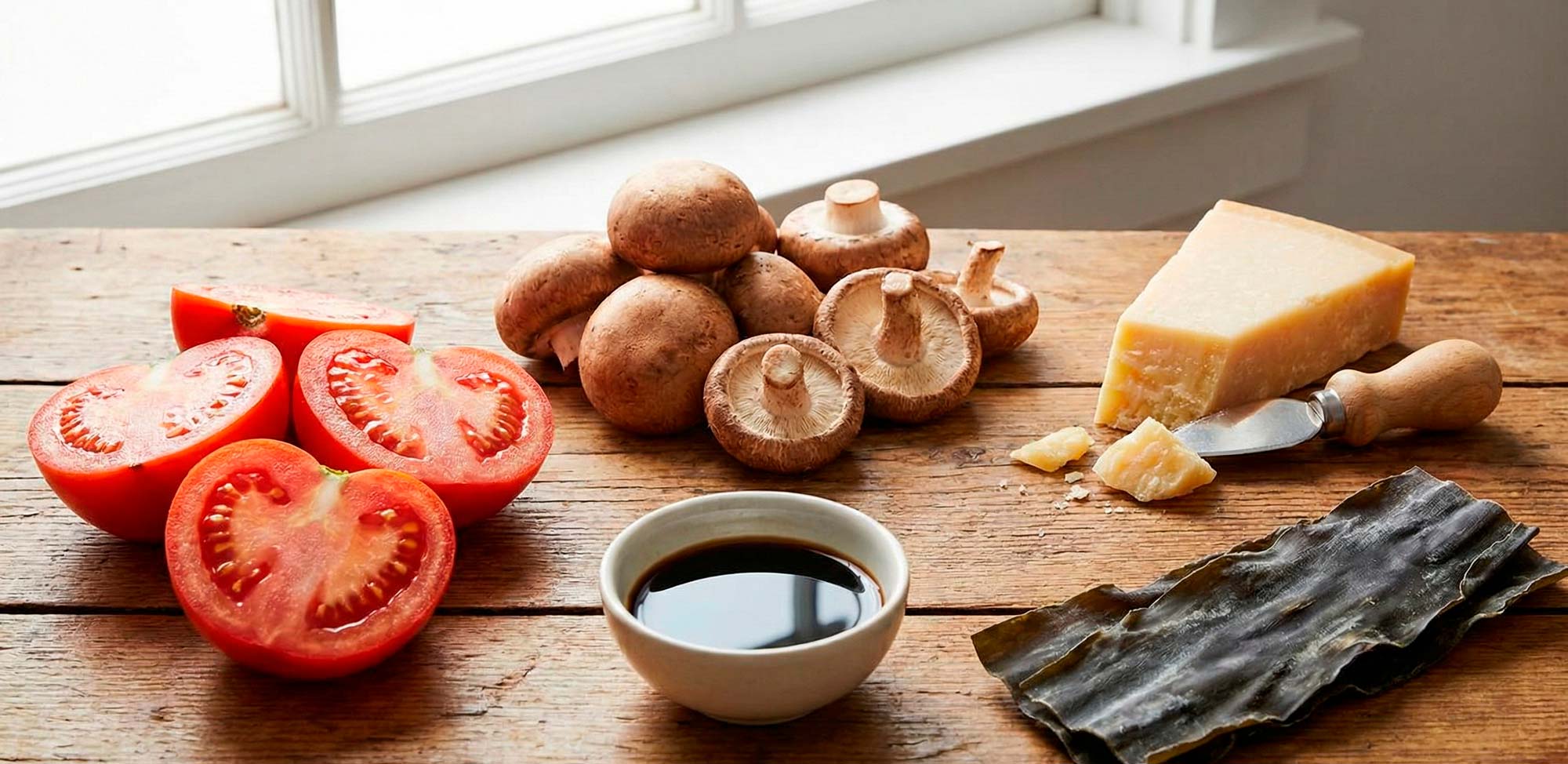
An assortment of umami-rich ingredients, including shiitake mushrooms, aged Parmesan cheese, fresh tomatoes, and a small bowl of soy sauce.

The Ingredients: The Glutamate Connection

To understand the relationship between MSG and umami, it is important to examine the underlying chemistry. They are not the same thing, but they are inextricably linked by one amino acid: glutamate.

  • What is Umami? Umami (a Japanese word roughly translating to ‘pleasant savory taste’) is not an ingredient you buy in a bottle. It is a core taste. The sensation is triggered primarily by glutamate, found abundantly and naturally in foods like cured meats, mushrooms, and soy sauce.
  • What is MSG? MSG stands for Monosodium Glutamate. It is simply one atom of sodium attached to the amino acid glutamate. While it sounds complex, it is essentially a purified, crystallized version of the savory flavor found in a steak or a piece of seaweed.

How They Enhance Food Preparation

Both natural umami sources and added MSG act as ‘flavor enhancers.’ They don’t just add their own flavor; they turn up the volume on the existing savory notes in a dish. Which option to use depends on personal preference. 

In the kitchen, they increase the physical sensation of taste by stimulating saliva secretion—literally making your mouth water. This makes food feel richer and more ’rounded.’ According to experts at Healthline, the body metabolizes the glutamate in MSG exactly the same way it does the glutamate found naturally in a tomato.

The Synergy: Taste, Nutrition, and Preparation

When natural glutamates interact with other compounds (like those found in meat or fungi), a ‘synergy’ occurs that magnifies the flavor exponentially. This is why a beef and mushroom stew tastes better than either ingredient alone.

Interestingly, MSG can be a secret weapon for health. Because it amplifies savory flavor so effectively, it can trick the palate into thinking food is saltier than it is. Since MSG has two-thirds less sodium than table salt, using a pinch to replace some salt can help reduce overall sodium intake without making the food taste bland.

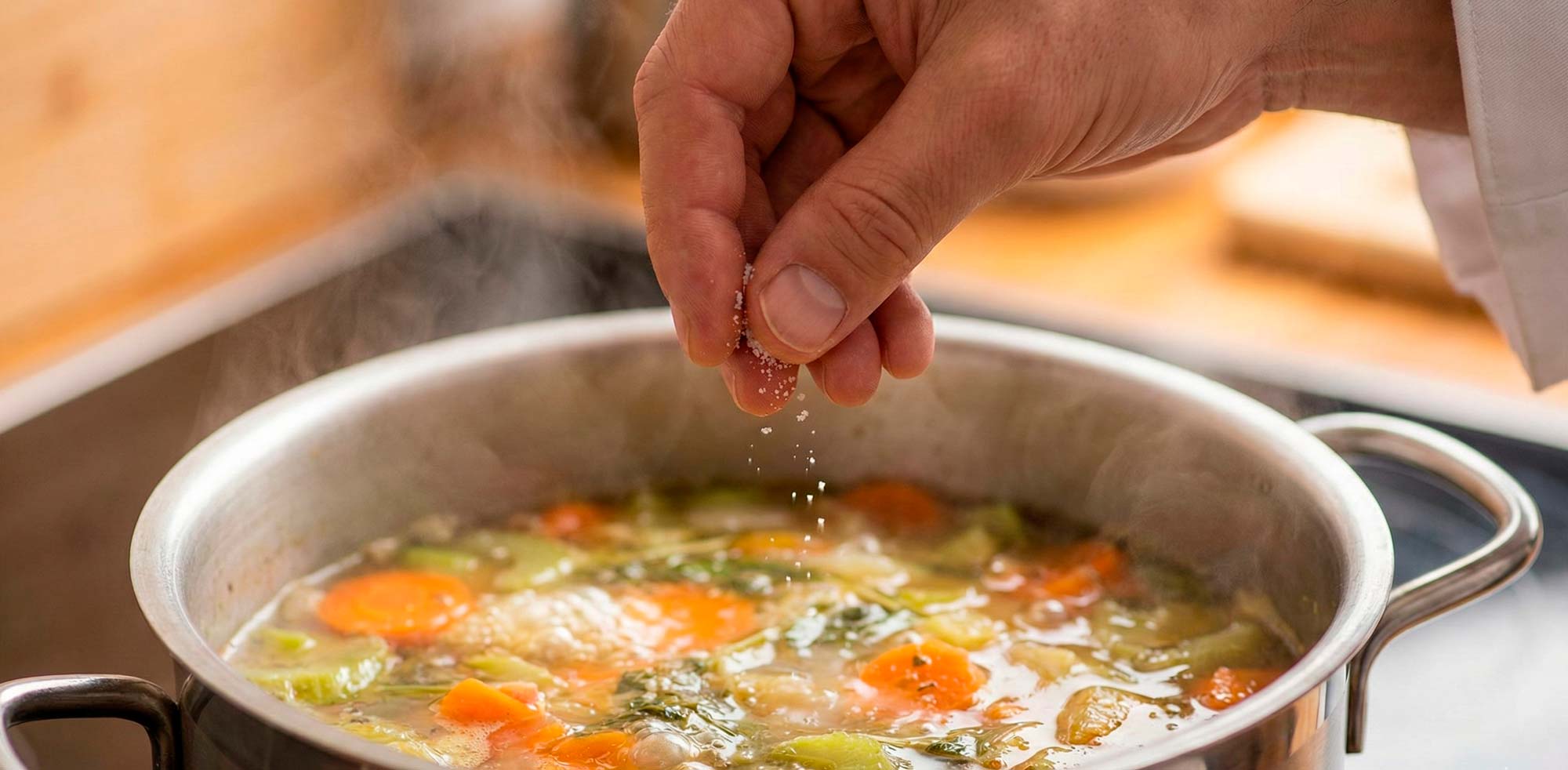
Close-up of a chef’s hand sprinkling a pinch of white seasoning.

Why MSG or Umami May Be Unnecessary

While organizations like the Cleveland Clinic note that MSG is safe for the general population, it isn’t always the right choice:

  • Clean Label Preference: Many home cooks prefer to get their ‘umami fix’ from whole foods like anchovies or sun-dried tomatoes rather than an additive.
  • Sensitivities: While rare, some people report short-term sensitivity (like a mild headache). If you find you feel better avoiding it, you can easily build deep flavor using natural umami-rich ingredients instead.
  • Controversy: We know the mention of MSG can still raise a few eyebrows. This controversy mostly stems from outdated 1960s myths and personal anecdotes that created a long-lasting stigma. While we completely understand why some consumers are cautious, major health organizations like the FDA and WHO have consistently confirmed that MSG is safe for the general population.

Conclusion: Navigating Uses and Challenges

MSG and umami are powerful tools. They are the secret behind crave-able foods and offer a pathway to making healthy, plant-based diets more enjoyable. The challenge lies in separating outdated myths from modern food science. Recognizing that chemically the glutamate in parmesan is the same as that in a shaker of MSG helps demystify some of the grocery store experience.

The Need to Know Your Ingredients

Ultimately, the goal is food literacy. Understanding the function of ingredients—why they are there and how they affect your body—empowers you to make better choices. Whether you choose to get your umami from a slow-roasted tomato or a dash of seasoning, knowing the science makes you a smarter consumer!

Ready to eat with confidence?

Stop guessing what’s in your food. The Honest About app simplifies complex labels, helping you understand exactly what you’re eating and why.

Download the Honest About App today and take control of your kitchen!